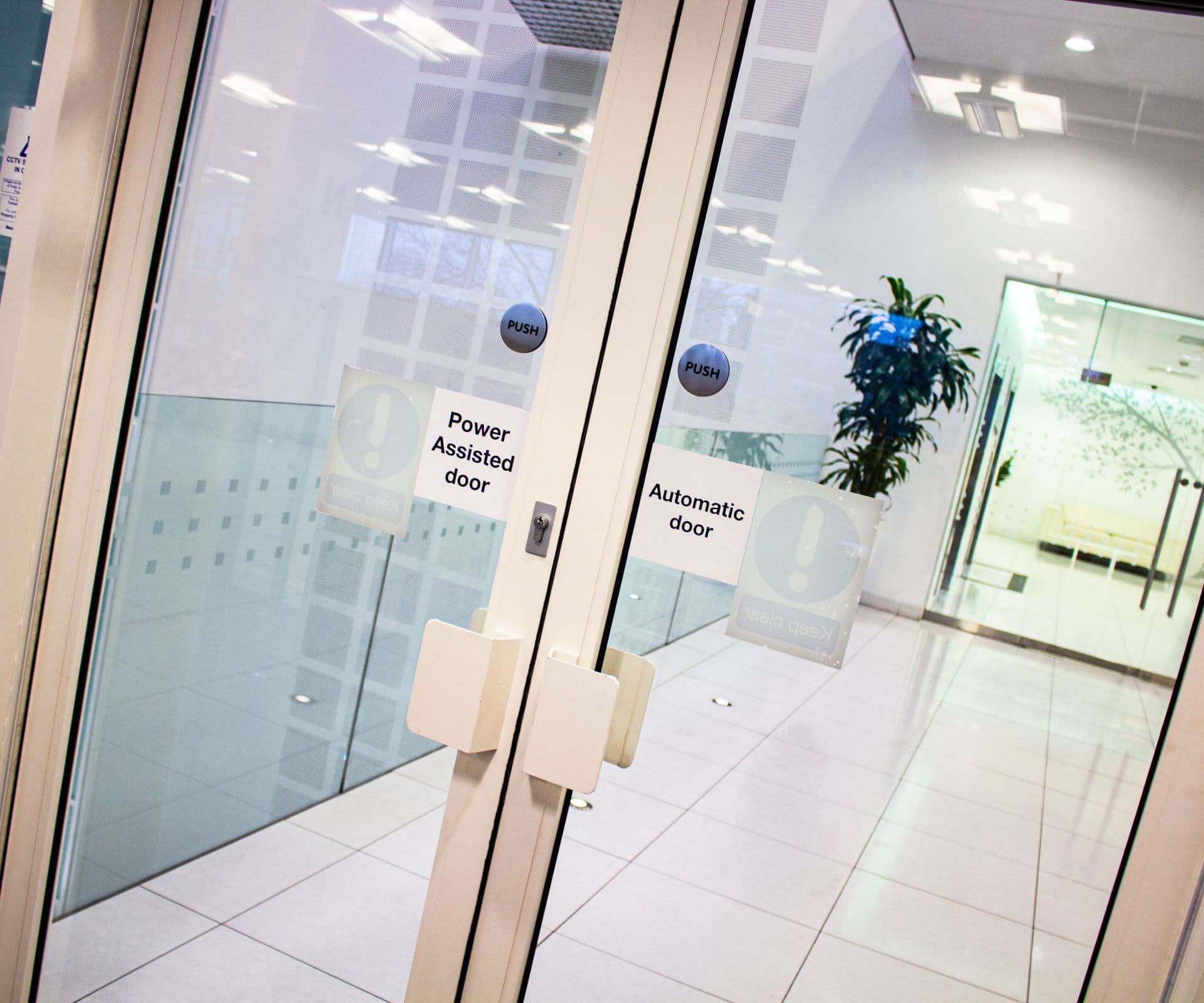
Automatic doors provide added convenience and accessibility for a wide range of buildings, and an automatic door sensor is a critical component of automatic sliding doors, as they allow the doors to detect the presence of people or objects and then open and close the doors accordingly.

They are efficient, space-saving and easy to maintain while also improving the overall appearance of the building.

What are automatic doors sensors and how do they work?

What type of automatic door sensor is used in automatic doors?

There is a range of different types of sensors that can be used in automatic doors. Some of the most common include:

Motion Detectors or Optical Sensors

Motion detectors are the most commonly installed type of automatic door sensor. As the name suggests, they detect movement in the vicinity of the doors. They will usually be fitted to the top or the side of the doors and the motion of a person within their field will signal the doors to open.

Active Infrared Sensors

 Active infrared automatic door sensors use receiver chips and a transmitter which detects whether the transmitter is emitting light from a person or an object.

Passive Infrared Movement Sensors

 These are sophisticated types of automatic door sensors that used infrared technology to map and remember an image of the surroundings. When this image changes, such as when a person is in the vicinity of the doors, the sensors will signal the doors to open and close. This means they can detect someone who isn’t moving as well as motion.

Radar Movement Sensor

As with motions sensors, radar movement sensors are able to detect something or someone in the vicinity of the doors. They’re also able to detect the direction of travel of the person or the object. However, they’re only able to detect a person or an object that is moving, not if they remain stationary.

Pressure Sensors

Pressure Sensors detect the weight of a person or an object. Once they detect weight pressure, a signal will be sent to the automatic doors for them to open.

Is an automatic door an active or passive sensor?

Automatic doors can be fitted with a range of different sensors. While passive sensor technology can be installed, an active sensor will usually be fitted. An active sensor detects the presence of a person or an object in its vicinity. The sensor will transmit a signal, and when this signal is reflected back after hitting an object, the sensor detects the reflection. Once this has happened the door will be activated.

This contrasts with a passive sensor which doesn’t emit a signal. This type of automatic door sensor relies on detecting the infrared radiation or magnetic field of an object in its vicinity.

How are automatic door sensors powered?

 In most cases, an automatic door sensor will be wired into the building’s main electrical system. This is nearly always the case when automatic door sensors are expected to be in use for extended periods.

In a busy commercial or public setting, ensuring your automatic door sensor always has the power it needs is critical. It’s also important to remember that most automatic doors will have either a secondary power source or a manual override in the event of a power outage.

Automatic door sensors in portable or stand-alone settings, such as at exhibitions or events, may be powered by batteries but this is rarely an option in heavy usage settings. An automatic door sensor may use solar panels, particularly in outdoor installations, or where access to a mains power supply isn’t practical. Wireless sensors are more likely to be powered by an alternative power source.

How do you install an automatic door sensor?

 Sensors are fitted as a key component of the overall installation process. The way in which they’re installed will depend on the type of sensor that you choose. Motion sensors will be installed at the top or the side of the door frame as this is the best location to detect movement. Infrared sensors will be mounted in a location where they are able to view the surrounding areas. They need to have a good vision of the vicinity of the doors to enable them to pick up a change in the usual imagery.

Pressure sensors need to be installed on the floor in order to detect the weight of a person. These need to be carefully fitted to ensure they don’t become a health and safety hazard. Our installation team will be able to advise about the most suitable sensor and power supply for your automatic doors.

To find out more about automatic door sensors and our reliable automatic sliding door installation and maintenance service, contact us today.

Filter

By Products Ranges


By Resistances


By Sectors


rnib doors

Safety For All With Safetell

RNIB (Royal National Institute of Blind People) is the largest community of…

2 men with ipad

Physical Protection For a Digital World

In a digital world driven by data, the growth of the data…

black gates outside a building in london

Safetell Safeguards Place of Worship against External Threats

Places of worship are a potential target for hate crime attacks, and…

Chinese bank security office

Safetell Creates a Secure and Efficient Banking Experience

For independent banks, having a global presence is crucial to their success….

power assisted door in a bank

Creating Equal Access in Banks

Equality of Access is a critical issue in modern times for both…

box office

Protecting Britain’s Heritage

The Stonehenge Visitors Centre in Wiltshire, England, is one of the most…

security door and glass

Prestige Pawnbrokers’ Security Upgrade

Physical security is of utmost importance for any business, especially for customer-facing…

bank windows

Safetell Offers Small Bank Big Security Upgrade

While many leading banks spare no expense or effort when it comes…

printing

Leading Newspaper Enhances Physical Security with CounterShield

The reception areas of today’s leading newspapers are surprisingly busy, frequented by…

inside a posh bank with security

The Trusted Choice for Embassy Security

Security and efficiency are of paramount importance to embassies and other diplomatic…