Corporate Security
09 October, 2024
It can often seem like the range of potential threats to business property and assets is growing and evolving at an incredible rate. While much of the focus over recent years has understandably been on cybersecurity, it’s still essential that organisations protect their physical assets such as buildings, machinery, inventory, and personnel.
Any breach of security that threatens the physical infrastructure of a business, whether that’s through theft, sabotage, or vandalism, can lead to substantial financial losses. In some cases, operations will be disrupted and harm could be caused to employees, customers, and members of the public.
What is corporate security, why is it important, and what will it typically involve?
What is corporate security?
Corporate security describes the comprehensive range of procedures, strategies, and measures that companies use to ensure they are kept safe from external and internal threats. Protection is put in place to protect against threats to company assets, property and personnel. It encompasses everything that is done to safeguard an organisation’s assets against potential dangers.
In the digital age, corporate security often has two elements, physical security and cybersecurity. While there is much attention placed on the developing cybersecurity challenges companies face, physical security still needs to be addressed.
People, property and physical assets need to be protected. This includes the prevention of theft, vandalism, sabotage, and even terrorism. At Safetell, we help our clients deploy robust protection of their physical assets.
What is the role of corporate security?
When it comes to physical security, the primary role of corporate security is to protect the company’s buildings, equipment, infrastructure, and personnel from external threats such as theft and vandalism.
In practice, these core elements of physical corporate security will usually include:
-
Access control and management
Regulating and controlling who can enter a company’s premises is a key element of corporate security. This will usually involve implementing systems such as keycards, turnstiles, automatic doors, and security checkpoints to ensure that only authorised people can enter. This is particularly important around sensitive or vulnerable areas. Access control across different parts of company premises significantly reduces the risk of unauthorised entry or insider threats.
-
Perimeter security
Securing the outer boundaries of a company’s building is an essential element of physical security. Typically, this includes elements such as fencing, barriers, gates, and surveillance systems. The aim of perimeter security is to prevent unauthorised individuals from gaining access to the premises. It should also act as a deterrent, making opportunist criminals think twice before attempting to enter the premises. It provides the first line of defence for critical areas of your business. Perimeter security will usually pay particular attention to potential weak spots and entry points, such as rear access or car parks.
-
Surveillance and monitoring
Surveillance systems such as CCTV cameras and motion detectors enable the monitoring of premises in real time. Some of these elements are usually visual, making them both a deterrent as well as a tool for detecting suspicious behaviour. Continuous monitoring allows for your security team to quickly identify and respond to any incident. Security breaches can be investigated, and evidence gathered if criminal activity takes place. Surveillance systems may incorporate advanced features such as facial recognition that further enhance physical security.
-
Security personnel
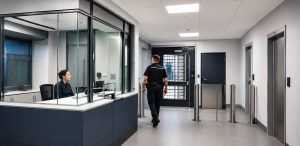
Trained security personnel may play a role in maintaining physical security, particularly in larger company premises. This may include on-site security guards, as well as remote monitoring by security teams. On-site personnel provide a visible deterrent and can respond quickly to unauthorised access or developing emergencies. Security personnel may also assist with access control, monitor security systems, and ensure compliance with safety processes.
-
Physical barriers
Physical barriers are usually a key element of any corporate security strategy. This will typically include elements such as speed gates, access-controlled automated doors, bollards, and security fencing. Taken together, these prevent unauthorised individuals from entering restricted areas. If a security breach does take place, intruders can be delayed, giving security teams more time to respond. Visible physical security measures can also provide a strong deterrent to opportunistic criminals.
-
Incident management
When a physical security breach occurs your corporate security strategy should have procedures in place to manage the response. This will include clear communications, security drills and other procedures that ensure the safety of people and property. Responsibility for different roles should be clearly defined and understood.
-
Protecting assets
Ensuring valuable physical assets, such as office equipment, machinery, or stored inventory is a key corporate security priority. To ensure that assets are protected, systems such as inventory tracking technologies are often deployed to prevent theft or tampering. Maintaining firm control over inventory and physical assets prevents costly losses and reduces the risk of operational disruption.
By ensuring that comprehensive physical security measures are in place businesses can create a secure environment, protecting their resources and fostering greater confidence among employees, customers, and other stakeholders.
Why is corporate security important?
Corporate security is essential to ensure the health and sustainability of a business. Some of the key reasons why it’s so important include:
-
Asset protection
Businesses invest substantial sums of money in their operational assets, including property, technology, and other equipment. Corporate security ensures that these investments are given robust protection from theft and vandalism. Without strong, well-thought-out, security measures in place, companies are at risk of losing resources. This can cause disruptions to its operations, as well as damage to its financial health.
-
Employee safety
Ensuring the safety of employees in the workplace has to be a top priority for any organisation. Physical security measures, such as security barriers, site monitoring, and security personnel, all help to create a safe working environment. This ensures that employees feel safe at work, increasing their well-being and boosting morale.
-
Preventing disruptions
Vandalism, theft, or physical attack can all disrupt daily activities and result in operational disruptions. These are not only disruptive; they can also be costly. Corporate security mitigates these risks, ensuring that entry points are secure, high-risk areas are monitored, and any incidents are responded to quickly before they have a chance to escalate.
-
Deterrence of crime and vandalism
A visible and well-implemented physical security presence, such as security barriers and CCTV, acts as a powerful deterrent to criminals. Any would-be intruders or vandals are less likely to target businesses where clear security measures are in place. This significantly reduces the risk of unauthorised access, theft, or damage.
-
Legal and regulatory standards
Organisations that handle sensitive materials or infrastructures, such as manufacturing, healthcare, and banking may be subject to a range of regulations around physical security. Failure to comply with any regulations can have legal, financial, and reputational implications. Corporate security ensures that any physical security measures meet any regulatory requirements.
-
Business continuity
Physical security ensures that businesses can minimise the risk of disruptions and quickly restore operations when incidents do occur. Corporate security prepares businesses for any potential crises to ensure they can effectively respond, maintaining operations with minimal disruption.
Options for corporate security
There are a range of options available to ensure corporate physical security. This includes everything from essential physical infrastructure to more advanced technological tools.
Some of the most commonly used options include:
-
Access control systems
A core component of corporate security is ensuring that you control who can enter and exit the premises. Access control systems enable you to monitor and restrict access to your building and more sensitive areas within your premises. Keycards, biometric scanners, and other access systems can be used to prevent unauthorised access. They allow only authorised individuals to gain access, while also keeping detailed logs of anyone who enters or exits the premises.
-
Speed gate and turnstiles
Speed gates and turnstiles are both physical barriers and an effective means to control foot traffic, particularly in entrances or restricted areas. These systems will typically require authorised personnel to use a keycard or biometric verification before they can access the premises.
Speed gates provide an added layer of security, preventing issues such as “tailgating” where someone tries to follow an authorised person into the premises or restricted areas. Speed gates are available in a range of options, including square cab, round cab, and two-tone square cab. These each provide robust protection, and limit the potential for tailgating, while being aesthetically pleasing.
-
Surveillance systems (CCTV)
Today, CCTV cameras are one of the most widely implemented physical security options. Surveillance systems allow businesses to monitor their premises and review footage. They can be attached to a manned, remote monitoring station that will respond quickly in the event of an incident recurring. They enable security personnel to monitor multiple areas from a centralised location. CCTV systems serve as both a deterrent and a valuable tool to aid investigations when security breaches occur.
-
Physical barriers
Physical barriers such as reinforced doors, security glass, and safes are essential to protect critical areas within a building. Physical deterrents slow down potential intruders and give your security team time to respond. Security walling and partitions, screens and counters, and other physical elements can all protect staff, secure assets, and act as a visible deterrent. These play an essential role in securing premises and form a vital part of overall corporate security.
-
Automatic doors
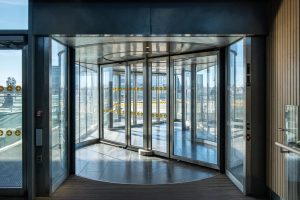
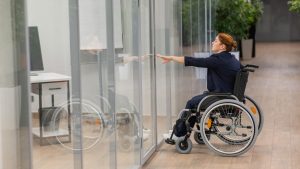
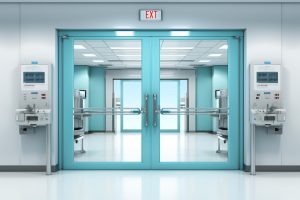
Automatic doors can be integrated with access control systems for added security and convenience. These systems will grant or deny access based on the credentials of the individual. Automatic doors are particularly useful for areas where there is high foot traffic, or for entrances that require additional security measures. Door automation can make the premises more secure with access easier to control. Automatic doors will usually be an essential component of a well-thought-out corporate security strategy.
Along with security teams, emergency response procedures, detection systems, and strong perimeter security, these measures provide a robust means by which to secure the security of corporate premises.
Comprehensive corporate security support from Safetell
Today’s challenges demand comprehensive levels of protection for employees and company assets, protecting against terrorism, criminality and unauthorised entry. At Safetell, our experienced team can help ensure your corporate security strategy is realistic, robust, and comprehensive.
Our unique portfolio of portfolio of products and services have been developed to meet the evolving needs of our clients. They have been tried and tested for over 30 years and are designed to provide full comprehensive levels of protection for employees and company assets, protecting against attacks, intrusions and theft.
Contact us to discuss your corporate security needs and to find out more about our products.